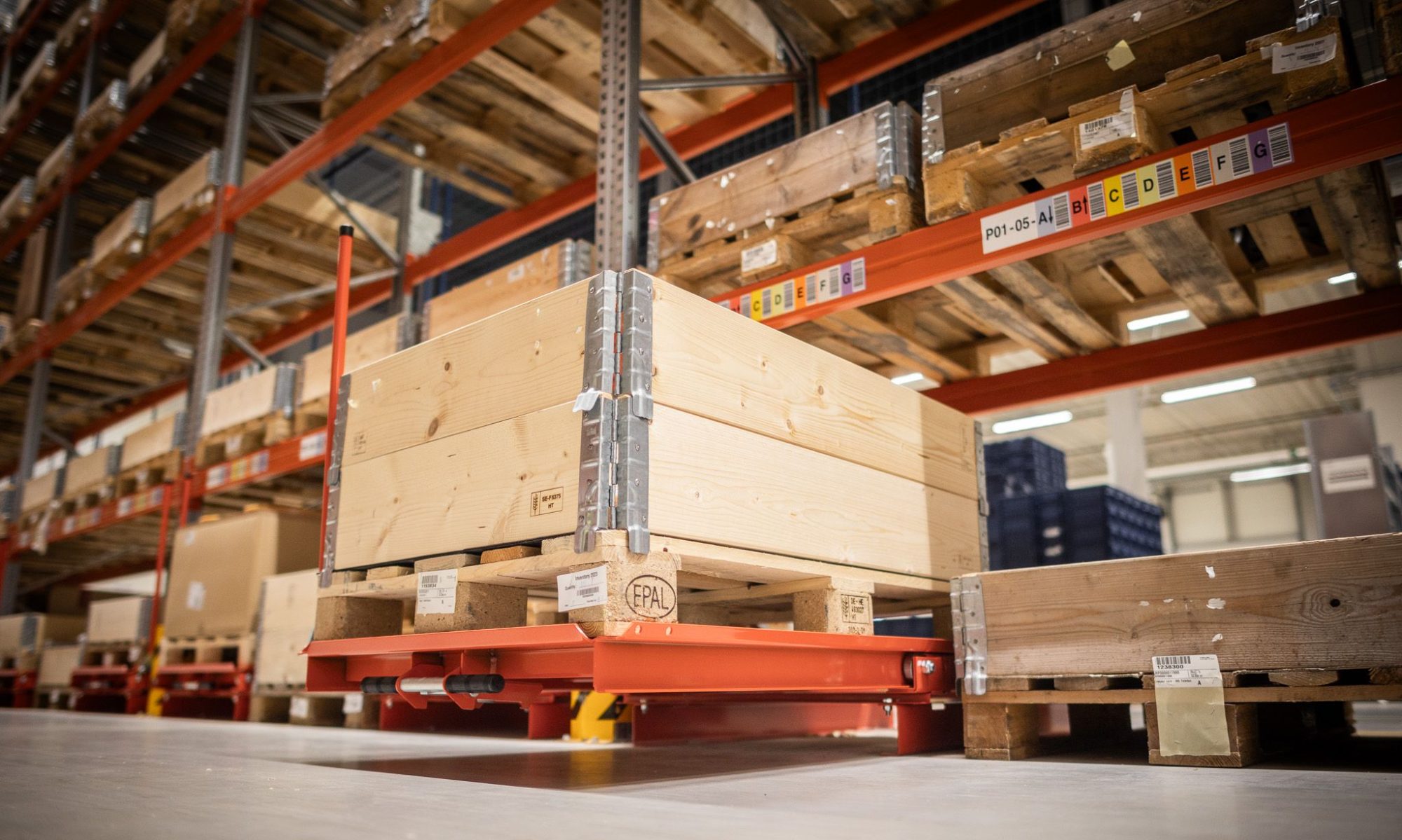
In order to understand current techniques and find gaps in their effectiveness, we conducted a survey of existing methods for pallet recognition, multi-label classification, and industrial anomalies. Below is a selection of papers and insights from them:
Pallet Detection And Localisation From Synthetic Data
In this study, the problem of pallet detection and localization based on synthetically generated data is addressed. Here, the emphasis is on creating varied pallet poses based on domain randomization, and training of the model is done for the purpose of corner detection. The identified keypoints are further used for PnP to localize the pallet. Though the technique offers excellent insight into geometry, it fails to capture semantic attributes associated with the pallets such as load status, stability, etc.
Multi-Label Plant Species Prediction with Metadata-Enhanced Multi-Head Vision Transformers
The contribution here is the introduction of a multi-label prediction framework that makes use of a shared Vision Transformer backbone and several lightweight classifiers for each label prediction. Each classifier handles one particular attribute prediction, enabling the network to output structured information using just one image input. The idea proposed by the authors is immediately applicable to pallet understanding since we need to predict multiple attributes (such as the existence of the pallet, the existence of cargo, and possible damages) using just one image input.
AnomalyGPT: Detecting Industrial Anomalies Using Large Vision-Language Models
This paper presents a vision-language solution for detecting industrial anomalies through visual localization and language reasoning. Instead of conventional approaches which depend on anomalous scoring and thresholding, this solution facilitates direct semantic understanding of the anomalies detected. This is directly related to our project since the focus moves from detection to reasoning, thereby enabling the system to deliver interpretable decision-making such as determining whether a pallet has been compromised and reasons why.
Together, these works highlight three key directions — geometric grounding, multi-attribute prediction, and semantic reasoning — which we combine in our approach to pallet anomaly detection.