Problem Statement
RAP has demonstrated strong performance on standard autonomous driving benchmarks. However, its rasterized scene representation makes deliberate simplifications that may limit robustness in real-world deployment. We identify three specific gaps that form the basis of our investigation.
🚦 Gap 1: Traffic Signs Are Not Encoded
Traffic signs including stop signs, speed limits, and school zone markers are entirely absent from RAP’s raster view. The rasterized representation encodes road geometry and agent positions, but contains no channel for sign information. This raises the question of whether the downstream planner can react to signs at all.
🚶Gap 2: Long-Tail Safety-Critical Scenarios
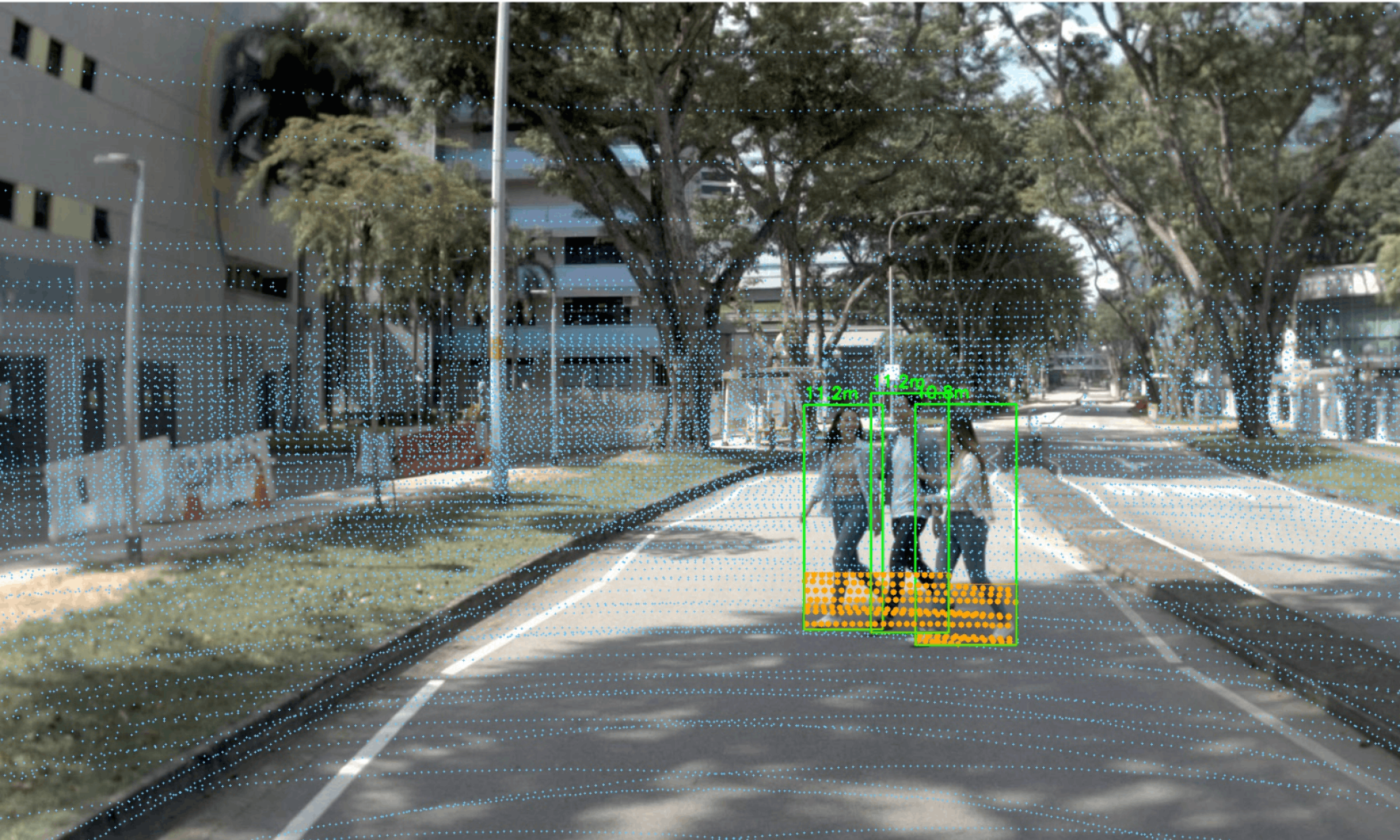
Jaywalking pedestrians and unguarded road obstacles are severely underrepresented in the nuPlan training data. With fewer than 0.01% of training samples containing such scenarios, the model receives almost no supervision signal for the situations that matter most for safe deployment.
Proposed Approach
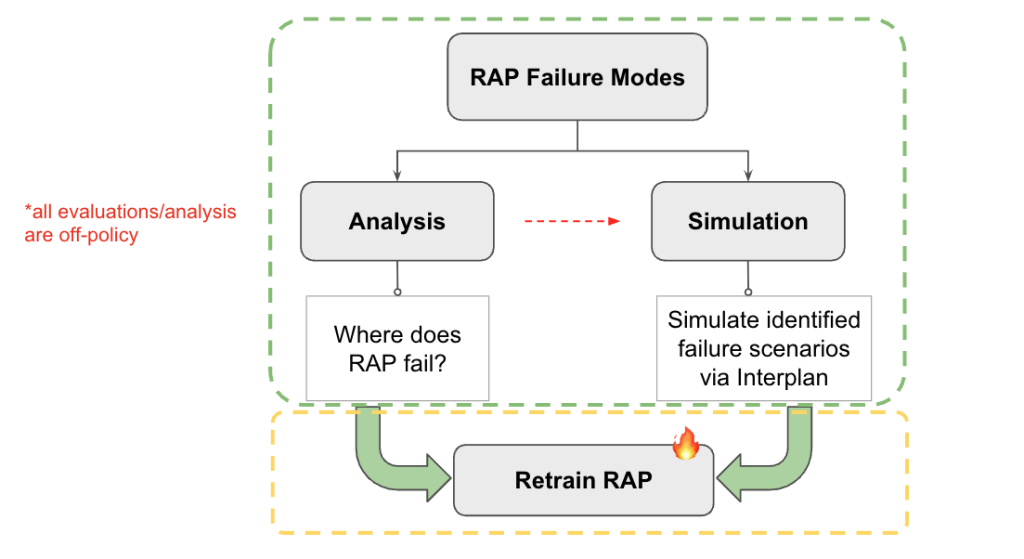
We address these gaps through two parallel tracks: off-policy analysis to probe where and why RAP fails, and closed-loop simulation using InterPlan to generate long-tail scenarios for evaluation.