
Welcome to MSCV Projects Sites. This is your first post. Edit or delete it, then start blogging!
Project Description
-
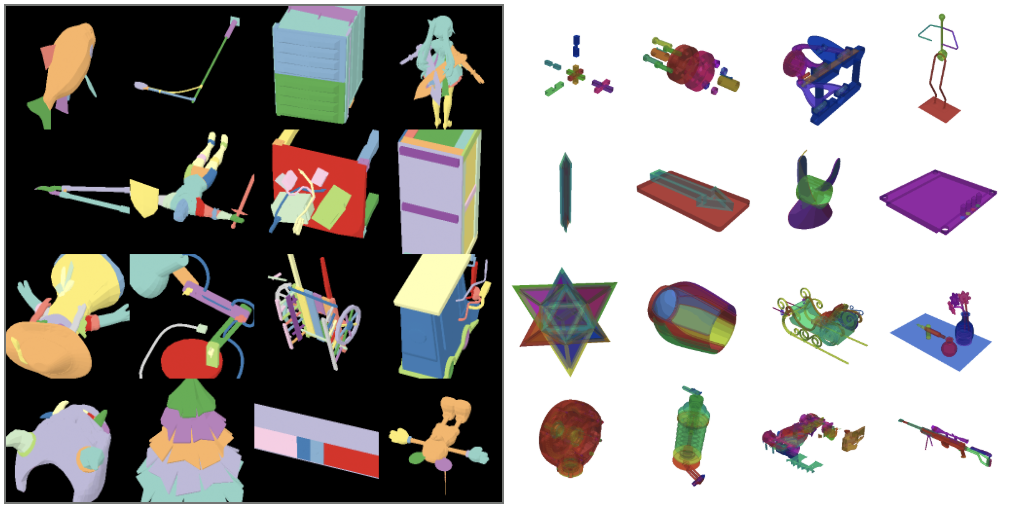
While modern 3D printing easily handles complex individual geometries, seamlessly transitioning from a unified digital mesh to a functional, physical assembly remains a significant bottleneck. The gap between a monolithic digital design and physically interlocking, printable components typically requires tedious manual intervention, precision modeling of joints, and extensive trial and error. This friction significantly slows down rapid prototyping and limits the scalability of complex, multi-part 3D printing projects.
To bridge this gap, our project introduces an end-to-end pipeline designed to automatically translate conceptual 3D models into production-ready, physically assemble-able parts. By automating the segmentation and joint creation process, the system takes an input geometry and outputs a set of individual 3D-printable meshes that are explicitly engineered to seamlessly fit together in the real world. This streamlines the entire transition from the digital screen to a functional physical prototype.
Ultimately, this project aims to deliver a robust tool for rapid 3D part generation. By removing the traditional barriers of manual joint design and the heavy computational demands of trained assembly models, it empowers researchers and engineers to iterate on complex designs at an accelerated pace. The pipeline offers a highly accessible, geometry-grounded solution that pushes the boundaries of what can be automatically prepared for functional 3D printing.