Robust · Unified · Precise
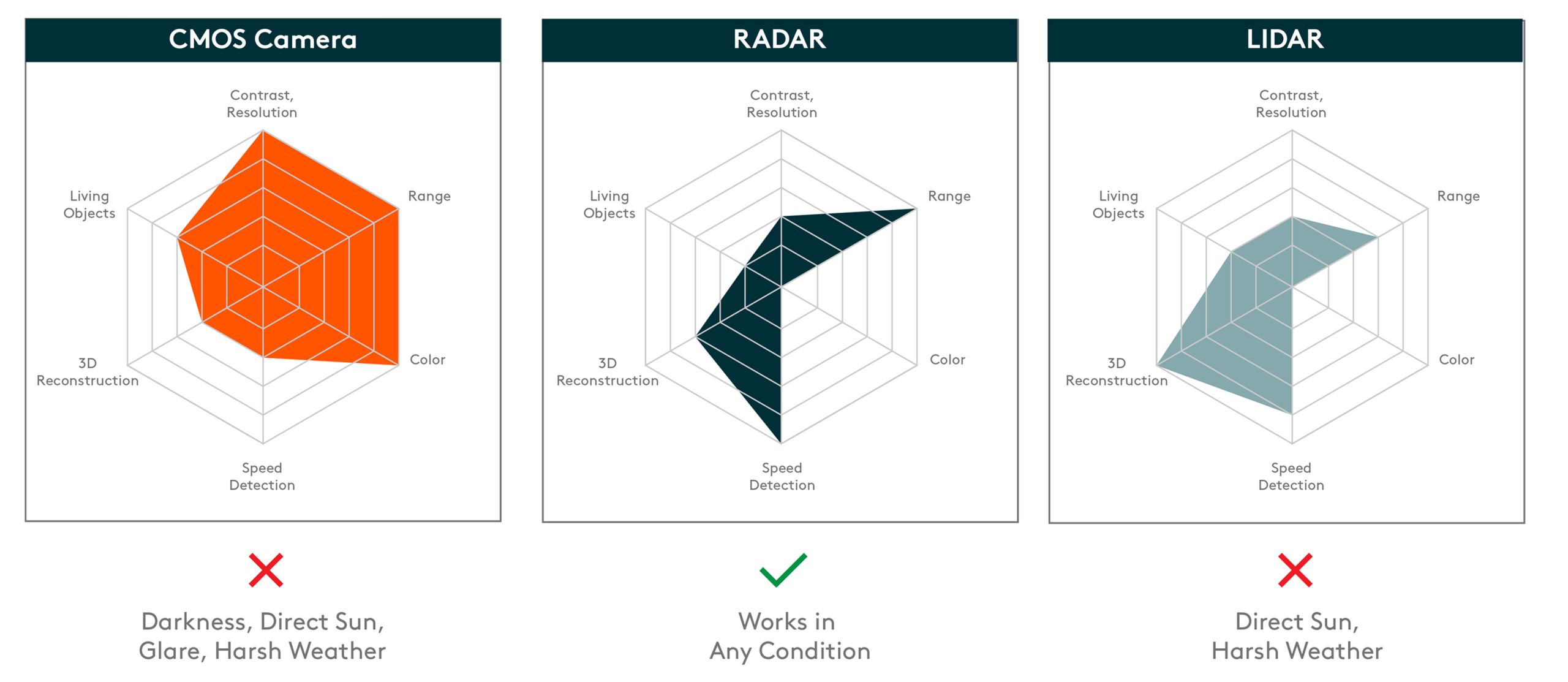
Oshkosh vehicles operate in harsh and dynamic environments where perception reliability is critical. Single-modality sensors (e.g. camera) are often fragile under challenging driving conditions. This work builds a unified perception system that integrates multiple sensor modalities (e.g. LiDAR, RADAR) to achieve robust understanding across environments.
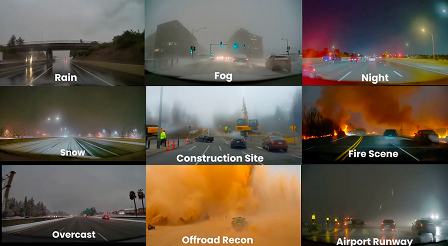
However, real-world degraded sensor data is both limited and expensive to collect. Existing autonomous driving datasets (e.g. NuScenes) are also biased toward common driving scenarios. This motivates us to investigate World Models for generating high-fidelity synthetic data under adverse weather conditions (e.g., rain, snow) and long-tail events (e.g., fire, dust storms).
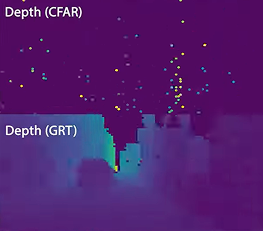
In addition, while RADAR is inherently robust across conditions due to mmWave sensing, its point clouds in common datasets are often sparse and noisy. This motivates our work on improving RADAR representations using a Generalizable Radar Transformer (GRT), and evaluating its effectiveness for 3D perception in autonomous driving.
Together, these components form a robust multi-modal perception stack designed for real-world autonomous driving in extreme conditions.