GIC: Gaussian-Informed Continuum
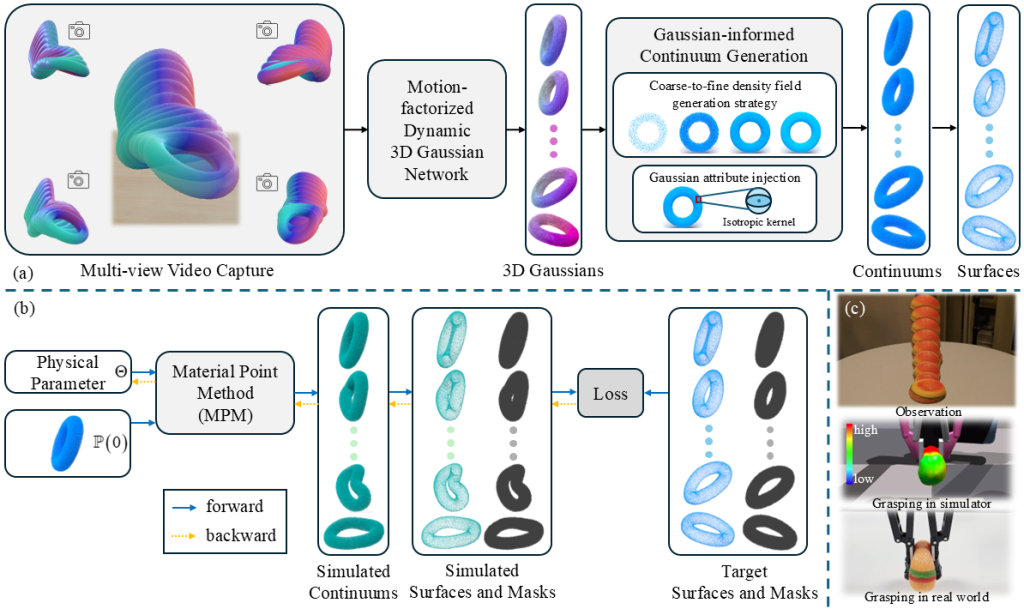
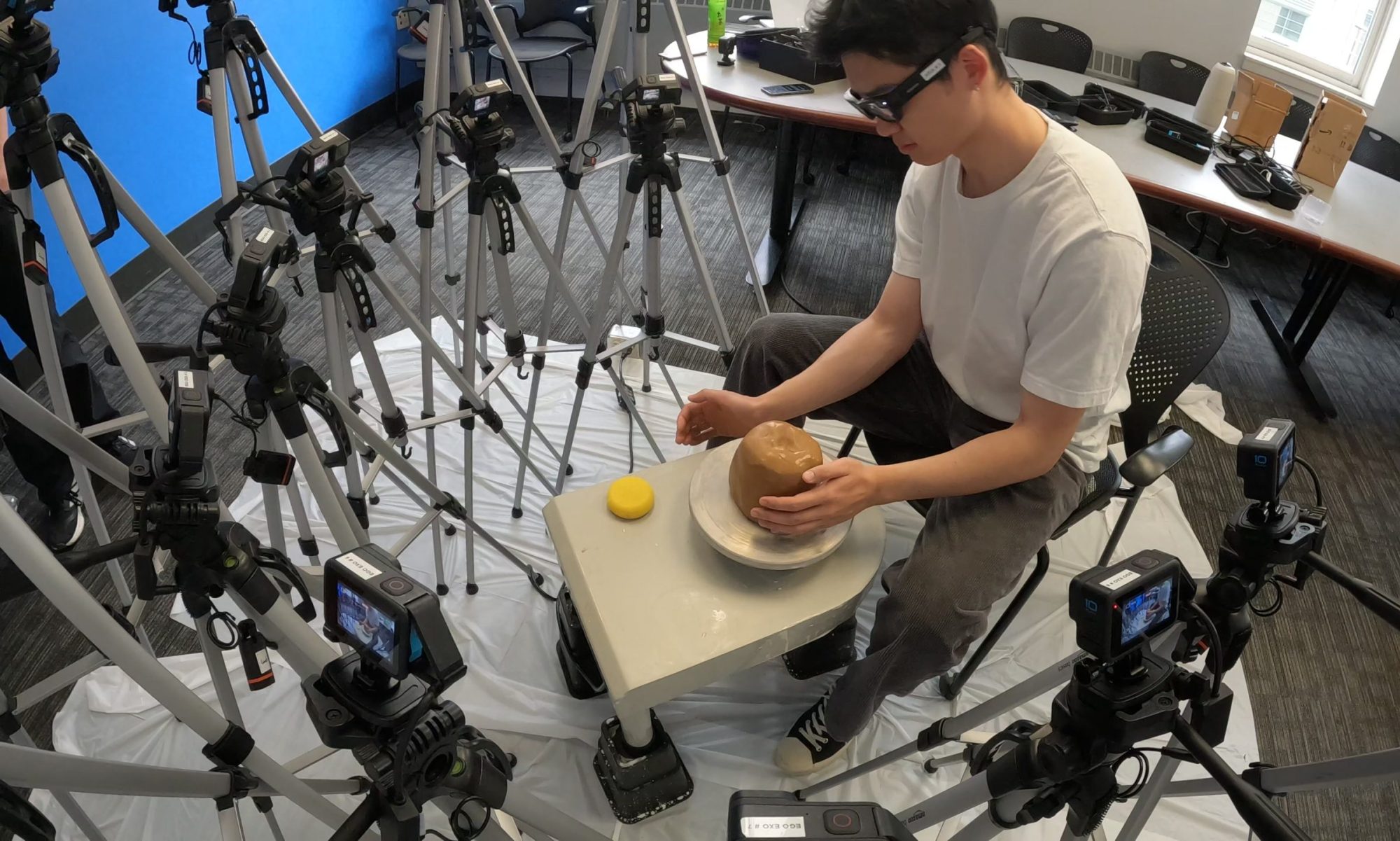
GIC is most relevant to the clay modeling side of our project. It reconstructs deformable objects from multiview RGB video and converts dynamic 3D Gaussians into a continuum representation for physics-based simulation. This is useful for our project because clay needs more than surface reconstruction: we want geometry that is physically meaningful over time. GIC is especially relevant because it estimates physical parameters through an MPM-based simulation loop and supports flexible, non-rigid object behavior. Its main limitation for us is that it does not jointly model humans, hands, or hand–object contact.
Contact4D
Contact4D is most relevant to the human and hand capture side of the project. It focuses on multiview capture, producing 3D joint positions that are consistent across views and fitting a parametric human model. For our project, this provides a strong baseline for recovering body and hand motion in a multiview studio. Its useful technical pieces include confidence-weighted triangulation, RANSAC, visibility-aware post-processing, and refinement using priors. The main limitation is that it focuses on fingertip contact and was tested in a furniture assembly domain, so it does not directly solve deformable clay reconstruction.
Dytact
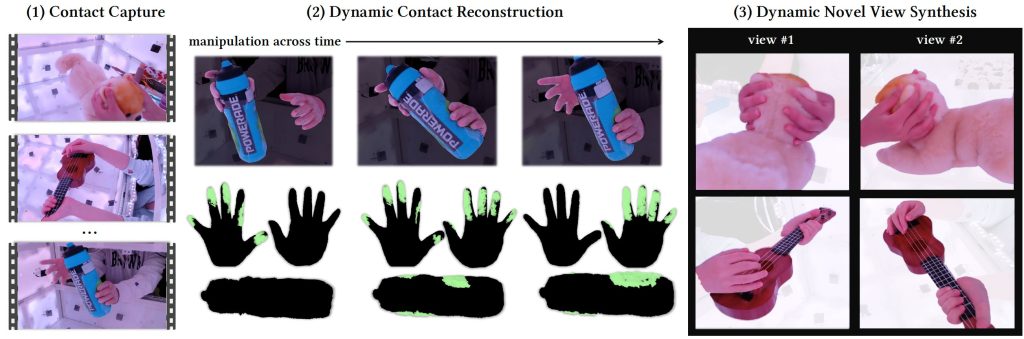
DyTact is most relevant to contact-aware hand–object reconstruction. Given multiview RGB videos, it reconstructs both the hand and object while estimating contact without requiring contact hardware. This is important for our project because hand–clay contact is the bridge between human motion and clay deformation. DyTact gives us inspiration for how to reason about contact from vision and how to focus reconstruction around regions where the hand interacts with the object. Its limitation is that it assumes rigid objects, requires a specific indoor multiview setup, and has not been open-sourced yet.